Buying a solar inverter in Pakistan can feel confusing. A 5kW model from one seller may cost far more than another, while technical terms such as hybrid, on-grid, MPPT, battery voltage, and surge capacity make comparison even harder.
Choosing only by price can leave you with an inverter that cannot run your appliances, support your battery, or provide backup during load shedding.
This guide makes the decision simple. It compares solar inverter prices in Pakistan for sizes ranging from 2kW to 50kW, explains what appliances each size can run, and shows how solar energy can reduce monthly electricity costs.
You will also learn the difference between hybrid, on-grid, and off-grid inverters, so you can avoid paying for features you do not need.
For example, a 5kW system may support a carefully managed combination of an inverter AC, refrigerator, fans, lights, television, router, and washing machine.
However, actual performance depends on appliance wattage, startup power, panel capacity, and battery size. This guide helps you calculate those requirements before spending your money.
You will also find a straightforward comparison of Luminey Elecra, G2 Pro, and G3 inverter models.
Whether you need backup for a small home or daytime solar savings for a commercial property, the goal is to help you choose a properly sized inverter that offers reliable performance, practical savings, and room for future needs.
The cheapest inverter is not always the best value. A useful comparison must separate hybrid, on-grid, off-grid, and pump inverters, because each category performs a different job.
Solar Inverter Price in Pakistan Updated 2026
The following price ranges combine visible listings and published guides reviewed on 27 July 2026. Prices change with exchange rates, stock, phase type, enclosure rating, warranty, and installation scope.
Inverter sizes with July 2026 planning prices, common applications, and important notes
Inverter size
July 2026 planning price
Common application
Important note
1kW to 2kW
PKR 30,000 to 85,000
Lights, fans, router, TV, small fridge
Usually off-grid or entry hybrid
3kW
PKR 70,000 to 200,000
Small home and essential loads
Check 24V or 48V battery requirement
4kW
PKR 72,000 to 220,000
Small to medium home
Enough for one efficient AC with managed loads
5kW
PKR 110,000 to 400,000
Medium home
Type and IP rating create a large price gap
6kW to 6.5kW
PKR 125,000 to 420,000
Medium to large home
Common hybrid size in Pakistan
8kW
PKR 230,000 to 500,000
Large home or small office
Confirm single or three phase
10kW
PKR 170,000 to 600,000
Large home, office, retail
On-grid models can cost less than hybrid
12kW
PKR 485,000 to 750,000
Large home or commercial backup
Battery voltage and phase vary by model
15kW
PKR 220,000 to 650,000
Office, shop, small commercial site
On-grid and hybrid prices are not comparable
20kW
PKR 300,000 to 850,000
Commercial building
Commonly three phase
30kW
PKR 310,000 to 1,150,000
Plaza, factory, agricultural load
Design and protection dominate total cost
50kW
PKR 515,000 to 1,500,000
Factory and large commercial site
Usually requires a formal project design
100kW to 150kW
PKR 1,100,000 to 1,600,000+
Industrial plant
Equipment quote excludes balance-of-system costs
Why the ranges are wide: A 5kW on-grid inverter cannot provide battery backup during an outage. A 5kW hybrid inverter manages solar, grid, and batteries, so it often costs more. Comparing only the kW label hides this important difference.
Market price evidence:
Claim: Pakistan inverter prices span roughly PKR 30,000 to more than PKR 1.5 million.
Method: Luminey reviewed visible listings and published ranges from the six user-supplied sources on 27 July 2026.
Limitations: Online prices can exclude delivery, installation, batteries, panels, smart meters, protection, taxes, commissioning, and warranty conditions.
Understanding these Four Terms before Buying Solar Inverter in Pakistan 2026
An inverter converts solar-panel DC electricity into the AC electricity used by household and business appliances. A hybrid inverter can also control batteries and grid power.
Before comparing prices, understand these four terms before buying Solar Inverter Price in Pakistan 2026:
Inverter system terms with plain-language meanings and practical importance
Term
Plain-language meaning
Why it matters
Inverter output, kW
Maximum continuous AC power the inverter can supply
Controls how many appliances can run together
Solar input, kW
Maximum panel power the inverter can accept
Controls daytime generation potential
Battery capacity, kWh
Stored energy available after sunset or during outages
Controls backup time
Battery power, kW
How quickly the battery can supply energy
Controls whether heavy appliances can start and run
A 5kW inverter does not contain 5kWh of energy. The inverter rating measures power at one moment. Battery kWh measures how long that power can continue.
On-grid, hybrid, or off-grid: Which type should you buy?
An on-grid inverter switches off during a grid outage for anti-islanding safety. Buyers who need fans, lights, or AC backup must choose a suitable hybrid or off-grid design with enough battery capacity.
Inverter type comparison showing solar, grid, battery, outage backup, and best uses
Inverter type
Uses solar
Uses grid
Uses battery
Backup during outage
Best for
On-grid
Yes
Yes
Usually no
No
Lowest-cost bill reduction and daytime commercial use
Hybrid
Yes
Yes
Yes
Yes, with a suitable battery
Homes needing savings and backup
Off-grid
Yes
No
Yes
Yes
Remote sites or locations without a dependable grid
Solar pump inverter
Yes
Optional by model
Usually no
Not a household backup system
Tube wells, irrigation, and water pumping
Best Solar Inverters in Pakistan 2026: Complete Comparison
The best inverter is the correctly sized model with verified protection, monitoring, battery compatibility, warranty, and local support. A famous brand cannot correct poor system design.
Luminey focuses on a connected product path that covers small hybrid homes, larger solar-plus-storage systems, and three-phase on-grid projects.
Luminey Inverter Model comparison
The Luminey product catalogue lists Elecra hybrid models plus G2 Pro and G3 on-grid models. Current public pages do not show retail prices, so buyers should request a written quote instead of relying on an invented number.
Luminey inverter models with type, AC output, PV input, battery system, and best fit
Luminey model
Type
Rated AC output
Maximum PV input
Battery system
Best fit
Elecra PV4000
Hybrid
3kW
4kW
Confirm from current datasheet
Small home and essential loads
Elecra PV5600
Hybrid
4kW
5.6kW
24V
Small to medium home
Elecra PV8000
Hybrid
6.2kW
8kW
48V
Medium to large home
G2 Pro 10K
On-grid, three phase
10kW
Up to 15kW DC
No battery backup
Home, office, or commercial self-use
G2 Pro 15K
On-grid, three phase
15kW
Up to 22.5kW DC
No battery backup
Office, retail, and small commercial site
G2 Pro 20K
On-grid, three phase
20kW
Up to 30kW DC
No battery backup
Larger commercial daytime load
G3 30K
On-grid, three phase
30kW
Up to 45kW DC
No battery backup
Plaza, factory, and commercial site
G3 40K
On-grid, three phase
40kW
Up to 60kW DC
No battery backup
Factory and high daytime demand
G3 50K
On-grid, three phase
50kW
Up to 75kW DC
No battery backup
Large commercial and industrial site
What Luminey Technology Adds
Luminey’s value is not only the inverter box. The practical advantage is a connected system path:
Elecra hybrid control: The Elecra series can coordinate solar, grid, and compatible battery storage for household backup.
Built-in monitoring: Luminey lists Wi-Fi and app monitoring across the Elecra range, helping owners see generation, consumption, battery behavior, and faults.
Model-level sizing: PV4000, PV5600, and PV8000 provide 3kW, 4kW, and 6.2kW output choices instead of forcing every home into one size.
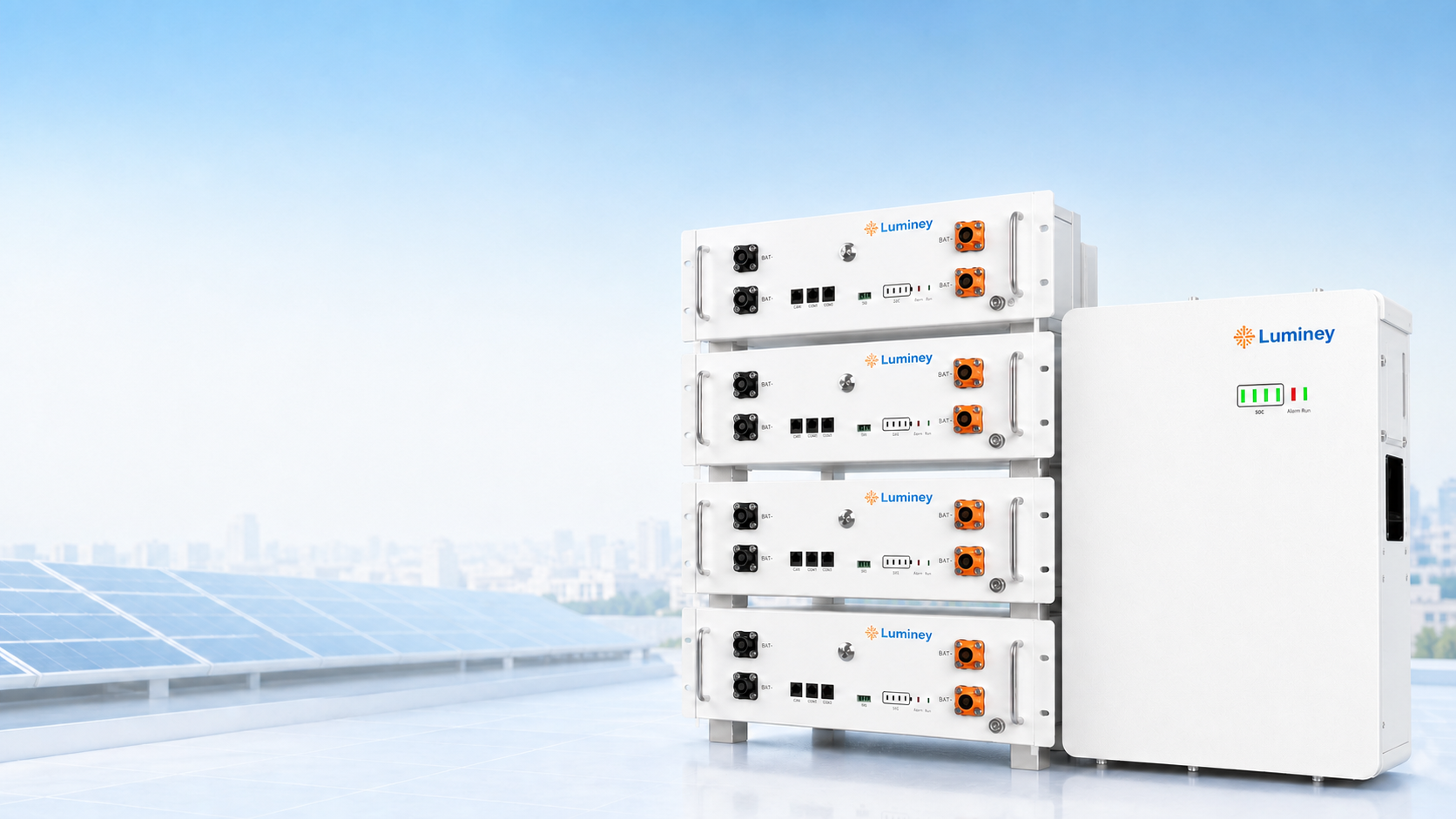
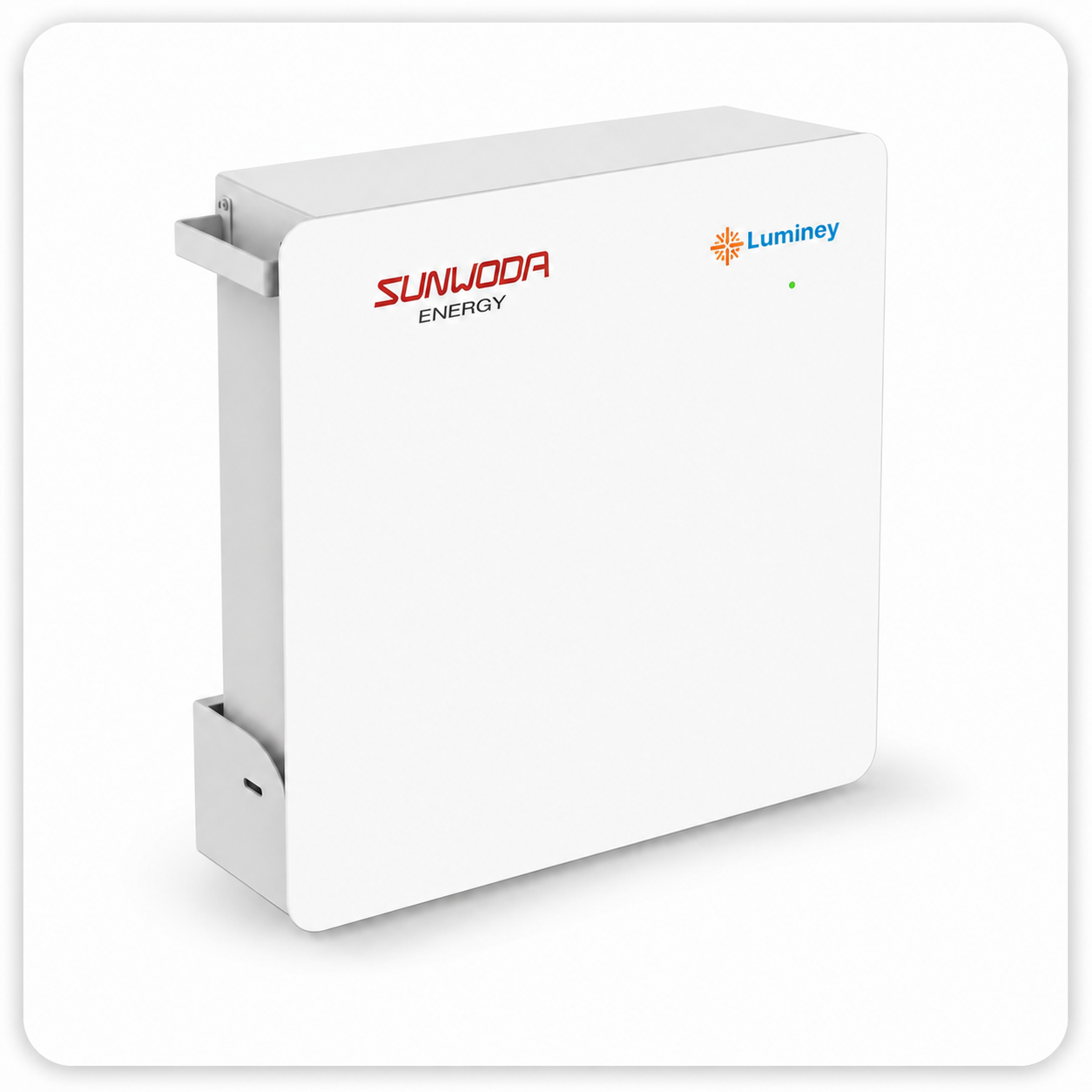
Residential storage compatibility: The published compatibility list includes Elecra PV8000 with Luminey Sunwoda Atrix storage.
Commercial scale: G2 Pro covers 10kW, 15kW, and 20kW. G3 covers 30kW, 40kW, and 50kW.
Local customer care: Luminey’s published PV5600 material lists care locations in Lahore, Multan, Faisalabad, Islamabad, and Peshawar.
Always confirm the current datasheet, warranty document, compatible battery list, firmware, and claim procedure before purchase. Product specifications and support terms can change.
What are Solar Inverter Prices in Pakistan 2026: PKR 30K to 1.6M
The headline price covers only the inverter in many listings. A working solar system can also require:
Solar panels
Mounting structure
DC and AC cables
DC isolators and breakers
Surge-protection devices
Earthing and lightning protection
Battery and battery protection for backup
Smart meter or export-control equipment
Installation, testing, and commissioning
Compare the Complete Installed Value
Basic inverter quote questions compared with more complete buying questions
Cheap quote question
Better buying question
What is the inverter price?
What is the complete installed and commissioned price?
How many kW is it?
What AC output, PV input, and surge power are available?
Does it support lithium?
Which exact battery models and communication protocols are approved?
Does it have a warranty?
What parts, labour, service, transport, and exclusions are covered?
Can it run two ACs?
What is the measured simultaneous load and startup requirement?
Is it weatherproof?
What is the documented IP rating and permitted installation location?
An unrealistically low quote may omit safety hardware or use a model with limited after-sales support. Ask for every component and warranty term in writing.
How Many Appliances can a Solar Inverter Run?
How much does a Solar Inverter Price in Pakistan (2026 Guide)? The inverter can run appliances whose combined continuous watts remain below its rated output. Motors and compressors also need short startup power, so a 20% to 30% operating margin is sensible for early planning.
These are planning ranges, not appliance guarantees. Read the appliance label and measure actual watts where possible.
Example Appliance Combinations
The examples show power, not runtime. A battery is needed for nighttime or outage operation, and battery kWh determines how long the appliances can run.
Typical appliance running power and important inverter sizing warnings
Appliance
Typical running power
Planning warning
LED bulb
8W to 12W
Multiply by total bulbs
Ceiling fan
60W to 90W
Older fans can use more
Wi-Fi router
10W to 20W
Low power but often runs all day
Laptop
45W to 100W
Charger and workload change demand
LED TV
80W to 150W
Screen size changes demand
Refrigerator
100W to 300W
Compressor startup can be much higher
Washing machine
400W to 800W
Water heating, if present, uses more
Water pump
750W to 1,500W
Motor startup requires surge capacity
Iron
1,000W to 2,000W
High load even without startup surge
1-ton inverter AC
700W to 1,500W
Weather, set point, and room heat change demand
1.5-ton inverter AC
1,000W to 2,200W
Measure real demand before final sizing
How to Calculate the Right Inverter Size
List every appliance that may run at the same time.
Record the running watts from labels or a plug-in energy meter.
Add the simultaneous running watts.
Add motor and compressor startup requirements.
Keep at least 20% to 30% operating headroom.
Check single-phase or three-phase service.
Match the PV voltage and current to the inverter MPPT limits.
For hybrid systems, match battery voltage, current, and communication.
Example: A measured 3,200W simultaneous load suggests at least 4,000W after a 25% planning margin. A larger margin may be required for pumps, compressors, or future expansion.
Updated Solar Inverter Price in Pakistan July 2026
Prices should be treated as snapshots. The same model can differ by city or dealer because the quote may include different warranty, delivery, installation, or promotional conditions.
Before paying, confirm:
Exact model number and serial verification
Rated AC output, not only maximum PV input
Hybrid, on-grid, off-grid, or pump type
Single-phase or three-phase output
MPPT count, voltage window, and input-current limit
Battery voltage and approved communication protocol
IP rating and installation limits
Parts, service, labour, and transport coverage
Local claim location and expected process
Included Wi-Fi, smart meter, dongle, or parallel kit
How much can a Solar Inverter help Save?
The inverter does not create energy by itself. Solar panels create energy, while the inverter converts and manages it. Savings depend on panel capacity, sunshine, shading, system losses, daytime use, tariffs, and export-credit rules.
Pakistan is identified by the World Bank’s solar-PV potential work as a country with excellent solar conditions. For simple planning, this article uses a conservative 4.0kWh of daily AC energy per installed kW of panels.
Monthly solar units = panel kW × 4.0 × 30
The next table assumes a matching panel array, no major shading, and PKR 60 saved per self-consumed grid unit. Replace PKR 60 with the effective variable rate from your own bill.
Example managed loads, approximate running watts, and planning notes by inverter output
Simultaneous compressor and motor startup still matters
10kW
3 efficient ACs, pump, 2 fridges, office or household loads
About 7,000W
On-grid models provide no outage backup
A Realistic 5kW Savings Example
Suppose a 5kW solar array produces 600 units in a month:
The home uses 420 units directly during daylight.
The grid receives the remaining 180 units.
Self-used electricity is valued at an illustrative PKR 60 per unit.
Exported electricity is valued at an illustrative PKR 11 per unit.
Calculation:
Self-use value: 420 × PKR 60 = PKR 25,200
Export value: 180 × PKR 11 = PKR 1,980
Total monthly energy value: PKR 27,180
If the home moved more AC, washing, pumping, and office loads into solar hours, the same generation could produce more value because self-consumed units avoid higher retail purchases.
Pakistan’s NEPRA Prosumer Regulations use net billing for new arrangements. Imported and exported units can have different values. Confirm the current export rate and treatment of your agreement with the relevant distribution company before calculating payback.
Savings Evidence and Limitations
Claim: A 5kW array can produce about 600 monthly units under the stated planning assumptions.
Method: 5kW × 4.0kWh per kW per day × 30 days.
Tariff assumption: PKR 60 for self-used energy and PKR 11 for exported energy are examples, not tariff promises.
Limitations: Weather, city, season, dust, heat, panel angle, inverter clipping, downtime, shading, and grid availability change actual generation and value.
Payback warning: Calculate payback from the complete installed system price, not the inverter price alone.
5kW Solar Inverter Price in Pakistan
A 5kw inverter generally costs PKR 110,000 to PKR 400,000 in Pakistan in July 2026. Entry indoor hybrid models sit near the lower end, while weather-resistant, premium hybrid, or advanced on-grid models can cost much more.
A 5kW inverter is a common fit for a medium home, but only after a load check. A practical managed combination might include:
One inverter AC
One refrigerator
Four to six fans
Eight to twelve LED lights
One TV and Wi-Fi router
A washing machine or water pump used at a planned time
Do not assume a 5kW inverter can run two ACs, an iron, a pump, and all kitchen appliances together. The combined load, startup surge, battery BMS, and wiring can become the limit.
Luminey does not currently list a 5kW-rated Elecra model on its public product page. The nearest choices are the 4kW Elecra PV5600 and the 6.2kW Elecra PV8000. Choose from measured load, battery voltage, and future demand, not from the nearest marketing label.
2kW Solar Inverter Price in Pakistan
A 1kW to 2kW solar inverter generally costs PKR 30,000 to PKR 85,000 in Pakistan. The category suits essential loads such as fans, lights, a router, television, laptops, and a small refrigerator.
A 2kW system is usually not the right choice for regular air-conditioner, iron, pump, kettle, or electric-heater use. These appliances can consume most of the inverter’s output alone.
Luminey’s current public hybrid range begins with the 3kW Elecra PV4000. A buyer comparing a 2kW unit should consider whether the PV4000’s extra headroom, monitoring, service path, and future flexibility justify moving to 3kW.
Checklist to Consider before buying the Best Solar Inverter in Pakistan Price
The best-value inverter is the smallest correctly sized model that safely supports the required loads and energy plan. Price matters, but five checks matter more before buying best solar inverter in pakistan price:
Correct type: Choose on-grid for daytime savings, hybrid for savings plus backup, or off-grid where the grid is absent.
Correct power: Size from measured simultaneous watts and startup surge.
Correct solar input: Verify panel voltage, current, MPPT window, and allowed array power.
Correct battery match: Verify voltage, BMS current, CAN or RS485 protocol, and approved model.
Correct support: Read warranty terms and identify the local claim route before purchase.
When Luminey is the Practical Choice
Luminey is a practical option for buyers who want a clear path across:
Small hybrid homes: Elecra PV4000
Medium hybrid homes: Elecra PV5600
Larger hybrid homes: Elecra PV8000
Three-phase on-grid projects: G2 Pro 10kW, 15kW, and 20kW
Commercial on-grid projects: G3 30kW, 40kW, and 50kW
Solar-plus-storage: Elecra with a verified Luminey residential battery configuration
Local assistance: Published customer-care locations and a central UAN
What is the Luminey solar inverter price in Pakistan?
Luminey does not publish fixed retail inverter prices on its current product pages. Request a written quotation for the exact model, city, warranty, delivery, and installation scope. Public market ranges are useful for budgeting, but they are not official Luminey prices.
Which Luminey inverter is best for a small home?
The Elecra PV4000 is Luminey’s smallest listed hybrid model, with 3kW AC output and up to 4kW PV input. It can suit essential home loads after a measured load check. Confirm battery voltage, surge demand, and current specifications before installation.
What can the Luminey Elecra PV5600 run?
The Elecra PV5600 provides 4kW rated output. A managed home load can include one efficient AC, refrigerator, fans, lights, television, router, and a washing machine. Actual performance depends on appliance watts, startup surge, battery power, and simultaneous use.
Is the Luminey Elecra PV8000 a 6kW inverter?
The Elecra PV8000 datasheet lists 6.2kW rated AC output and up to 8kW of PV input. The PV8000 name refers to solar-input capacity, not 8kW AC output. This distinction prevents oversizing appliances against the inverter’s actual output.
Does a Luminey hybrid inverter work during load shedding?
A correctly installed Elecra hybrid system can supply selected loads during load shedding when a compatible battery has sufficient energy and power. Backup time depends on battery kWh, load watts, battery limits, inverter efficiency, temperature, and the selected reserve.
Can Luminey inverters work without a battery?
Operating modes differ by Elecra model and firmware. Some hybrid functions can use solar and grid without a battery, but outage backup requires storage. Ask Luminey to confirm battery-free operation, grid-feeding availability, transfer behavior, and limitations for the exact model.
Which batteries are compatible with Luminey Elecra inverters?
Battery compatibility must be checked by exact inverter model, battery model, firmware, voltage, and communication protocol. Luminey’s published compatibility material lists Elecra PV8000 with Luminey Sunwoda Atrix. Request the latest compatibility revision before buying or changing a battery.
Do Luminey solar inverters include Wi-Fi monitoring?
Luminey lists built-in Wi-Fi and app monitoring for the Elecra range. Monitoring can show production, operating status, and faults, depending on model and setup. Confirm whether the required Wi-Fi hardware, account activation, and commissioning are included in the quotation.
What warranty comes with a Luminey Elecra inverter?
Published Luminey PV5600 material states 12 years as one year of parts and service plus eleven years of service, subject to terms. Other listings also show 12 years. Request the current model-specific warranty document, exclusions, labour coverage, and transport process.
Are Luminey inverters suitable for outdoor installation?
Do not install an inverter outdoors unless its current datasheet and manual permit that location. Published Elecra PV5600 and PV8000 listings show IP21, which requires a protected indoor environment. G2 Pro and G3 on-grid models list IP66 protection.
What is the difference between Luminey Elecra and G2 Pro?
Elecra is Luminey’s hybrid range for solar, grid, and compatible battery storage. G2 Pro is a three-phase on-grid range in 10kW, 15kW, and 20kW sizes. G2 Pro reduces daytime grid purchases but does not provide battery backup during outages.
What is the difference between Luminey G2 Pro and G3?
G2 Pro covers 10kW, 15kW, and 20kW three-phase on-grid projects. G3 covers larger 30kW, 40kW, and 50kW projects. The listed models share up to 98.6% maximum efficiency, while MPPT counts and input capacity increase with size.
How much electricity can a Luminey inverter save?
Savings depend on panel capacity and daytime consumption, not the inverter alone. Under this guide’s 4.0-unit daily yield assumption, a 6.2kW array produces about 744 monthly units. At PKR 60 per self-used unit, the illustrative value is PKR 44,640.
Can a Luminey inverter run an air conditioner?
Yes, a correctly sized Elecra system can run an inverter AC when continuous output, startup demand, battery power, wiring, and other simultaneous loads stay within limits. Measure the AC’s real watts in hot weather because tonnage alone does not determine electrical demand.
Where can I get Luminey inverter support in Pakistan?
Luminey provides a central UAN at 0311 1777055. Published product material lists customer-care locations in Lahore, Multan, Faisalabad, Islamabad, and Peshawar. Confirm the nearest active centre, warranty claim procedure, and required documents before purchase.
Get a Luminey inverter sizing and price check
For a useful quotation, send Luminey:
Your city and electricity connection phase
A recent electricity bill
Appliances that must run together
Required outage backup hours
Existing panel and battery details, if any
Planned installation location
This information lets the team compare Elecra, G2 Pro, and G3 options around your actual load instead of guessing from house size.

.png)